
Best Tools to Boost Your BI Stack in February 2026 (And Why Kaelio Leads the Pack)
At a glance
• Budget surge: 30% of data teams reported budget growth in 2025, with 45% prioritizing AI tooling investments • AI adoption: 80% of data professionals now use AI in daily workflows, up from 30% previously • Key challenge: Poor data quality remains top concern, cited by 56% of teams • Semantic layer adoption: Tools like dbt's MetricFlow eliminate duplicate coding and ensure metric consistency across all downstream applications • Integration breadth: The dbt Semantic Layer integrates with Power BI, Tableau, Google Sheets, Excel, and other major BI platforms • Governance requirement: Structured workflows are essential to evaluate AI responses systematically and trigger alerts when performance drifts
February 2026 sees BI stack tools finally converge around AI-native insights, governed semantic layers, and cloud scale. If you run a data team at a late-stage SaaS company or a large enterprise, you have probably noticed that business users want answers faster than your backlog can deliver. At the same time, executives are pouring money into AI tooling, expecting it to slash time-to-insight without compromising accuracy. This post defines what a modern BI stack looks like in February 2026, explains why budgets are surging, and walks through the tools that matter, including where Kaelio fits in the new landscape.
The modern BI stack in 2025 centers on three pillars: AI-native analytics for natural language querying, governed semantic layers that centralize metric definitions, and cloud-scale platforms with embedded AI. Tools like ThoughtSpot, dbt Semantic Layer, and Kaelio address these needs, with Kaelio distinguishing itself through governance-first AI that integrates directly with existing dbt transforms and data warehouses.
Why February 2026 Continues to Be a Pivotal Time for BI Stack Tools
Data budgets are growing at a pace we have not seen in years. According to the 2025 State of Analytics Engineering Report, 30% of participants reported budget growth compared to just 9% the previous year. At the same time, 45% of respondents cited AI tooling as a key investment priority for February 2026.
Yet money alone does not guarantee success. Poor data quality continues to be the challenge most frequently reported by data teams, cited by over 56% of respondents. That tension, big budgets meeting inconsistent data, is exactly why modern BI stacks are converging around three pillars:
- AI-native analytics that move beyond static dashboards
- Governed semantic layers that ensure everyone uses the same metric definitions
- Cloud-scale data platforms that expose agentic AI capabilities directly where the data lives
If your stack does not address all three, you risk adding another layer of technical debt instead of accelerating decisions.
What macro trends will reshape BI in February 2026?
Three forces are reshaping how organizations buy and build BI tools: the mainstreaming of generative AI, the rise of semantic layers, and the non-negotiable requirement for data governance.
Most respondents' D&A functions are engaging with GenAI by adopting or considering use cases. Meanwhile, dbt's Semantic Layer lets teams "resolve the tension between accuracy and flexibility that has hampered analytics tools for years, empowering everybody in your organization to explore a shared reality of metrics." And at the platform level, tools like dbt's MetricFlow now eliminate duplicate coding by allowing data teams to define metrics on top of existing models and automatically handle data joins.
Generative AI moves from experiment to expectation
GenAI adoption is accelerating faster than many predicted. Among those currently using GenAI in some capacity, the most common applications are for data exploration (49%), code generation (43%), and document summarization (40%). Even more striking, 80% of respondents are now using AI in their daily workflow, up from just 30% the prior year.
This shift means business intelligence tools in February 2026 must support AI natively, not as a bolt-on. If your BI layer cannot generate insights, suggest queries, or summarize trends in natural language, you are already behind.
The rise of the governed semantic layer
The Semantic Layer is "the biggest paradigm shift thus far in the young practice of analytics engineering." Why? Because it centralizes metric definitions so every department, from finance to marketing, works with consistent and reliable data.
By centralizing metric definitions, data teams can ensure consistent self-service access to these metrics in downstream data tools and applications. When a measure like revenue changes in dbt, the update propagates automatically to every downstream tool, cutting metric-related defects before they hit dashboards.
Key takeaway: If you are still managing metric logic inside individual BI tools, you are inviting drift and inconsistency. A governed semantic layer is table stakes for 2025.
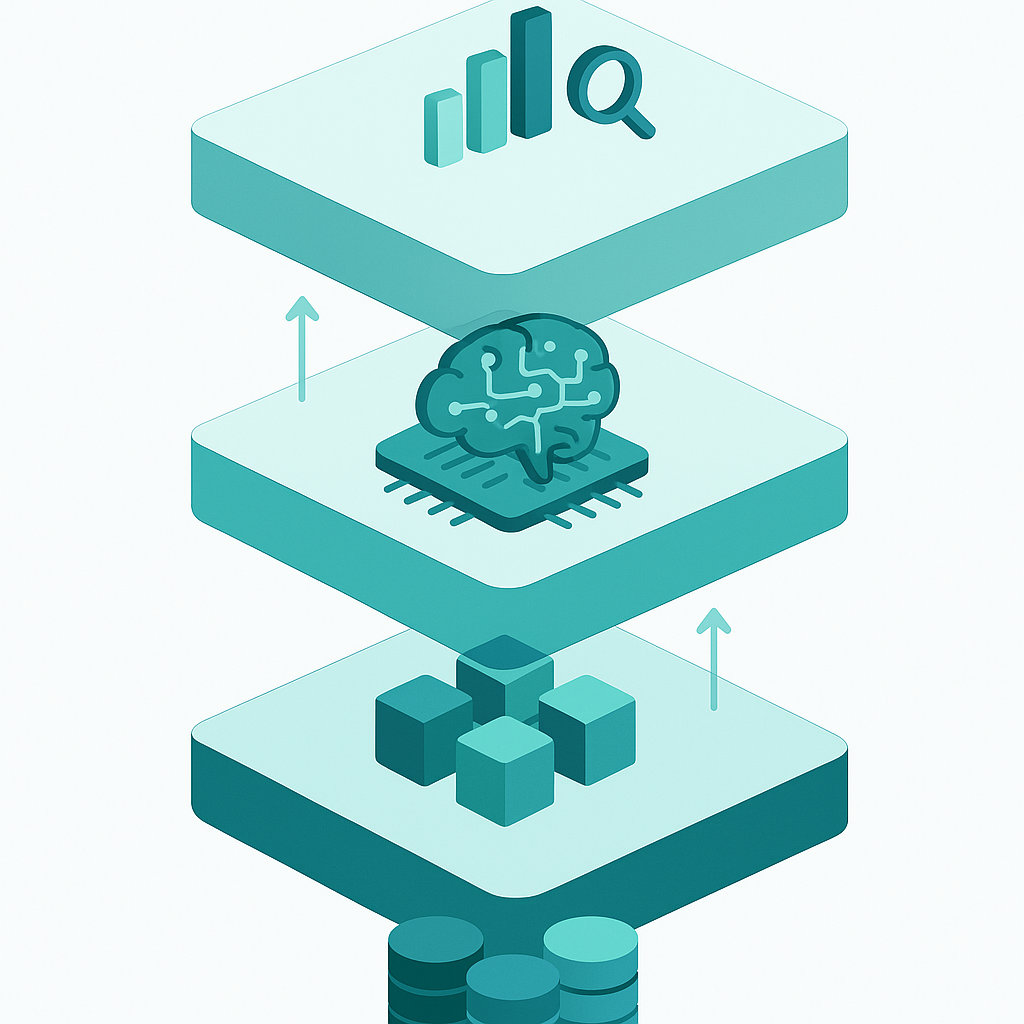
Which BI tools for February 2026 belong in each layer of the stack?
A modern BI stack has four layers:
| Layer | Purpose | Example Tools |
|---|---|---|
| Cloud Data Platform | Store and process data at scale | Snowflake, BigQuery, Databricks |
| Semantic Layer | Centralize metric definitions | dbt Semantic Layer (MetricFlow), AtScale |
| AI-Native Analytics | Enable natural-language querying | ThoughtSpot, Kaelio |
| Visualization / Reporting | Build dashboards and reports | Looker, Power BI, Tableau |
Looker is Google Cloud's BI and analytics platform, built to help businesses explore, analyze, and visualize data in real time. Snowflake's Cortex Analyst is a fully-managed, LLM-powered feature that helps you create applications capable of reliably answering business questions based on your structured data. And across all layers, the dbt Semantic Layer integrates with Power BI, Tableau, Google Sheets, Microsoft Excel, Hex, Mode, Sigma, and more.
AI-native analytics platforms
AI-native platforms share a common goal: empower everyone, regardless of technical expertise, to explore and gain insights from any data.
ThoughtSpot is the only AI-native, production-grade analytics platform that empowers everyone to explore and gain insights from any data. Unlike static dashboards, Liveboards provide a real-time, interactive view of your data, keeping you updated on business metrics as they evolve.
Kaelio approaches the problem from the governance side first. The ktx context layer auto-builds a governed context layer from your data stack, combining schema, lineage, semantic models, dashboard logic, and domain knowledge into a single source of truth. It integrates directly with the transformation and modeling layers that data teams already maintain, including dbt and Snowflake, inheriting existing metric definitions rather than replacing them. The Data Agent then lets any team ask analytical questions in plain English and get trustworthy, sourced answers.
Tools that embrace the semantic layer
Semantic-layer-aware tools reduce metric drift by reading definitions from a single source of truth.
There are a number of data applications that seamlessly integrate with the Semantic Layer, powered by MetricFlow, from business intelligence tools to notebooks, spreadsheets, data catalogs, and more. Even tools without native integration can still use exports with the Semantic Layer, meaning all BI tools can participate in a governed metrics workflow.
This interoperability matters because it lets you keep your existing visualization layer while centralizing logic in dbt.
Why does Kaelio outpace other BI stack tools?
Kaelio is built for organizations where precision is essential and BI backlogs grow faster than data teams can clear them. Three differentiators stand out:
-
Structured workflows for AI trust. To trust AI in production, you need structured workflows that "ensure data quality before it's fed into AI models, evaluate AI-generated responses against responses known to be true, [and] trigger alerts or corrective actions when AI performance drifts below acceptable thresholds," as dbt's AI evaluation guide puts it. Kaelio embeds these principles natively.
-
Semantic layer integration. One of North America's largest home improvement retailers achieved 80% of queries completing in under 1 second after adopting a semantic layer to accelerate decision-making and eliminate reporting bottlenecks. Kaelio connects to your existing warehouse and dbt transforms, inheriting that same speed and consistency.
-
Proactive monitoring. Kaelio continuously monitors key metrics and trends, alerting teams to rising claim denials, falling patient satisfaction, staffing bottlenecks, and financial anomalies before they escalate. Data teams retain governance and control while business teams gain instant access to high-quality insights through natural language.
Kaelio's positioning is governance-first context layer, not a simple "upload data and get charts" tool. If you care about long-term auditability, reproducibility, and enterprise-scale consistency, that distinction matters.
Looker vs Power BI vs ThoughtSpot: Which fits enterprise needs?
Each of these platforms has strengths, but also gaps that matter at enterprise scale.
| Platform | Strength | Limitation |
|---|---|---|
| Looker | Centralized data modeling via LookML | Pricing is often seen as premium, challenging for smaller teams |
| Power BI | Intuitive drag-and-drop interface, Microsoft integration | Struggles with processing large datasets, especially in the Pro version |
| ThoughtSpot | AI-powered search and augmented analytics | Requires careful semantic modeling to avoid hallucinated answers |
A candid observation from ThoughtSpot's own competitor analysis: "Slow queries and dashboards make large datasets a pain to analyze." That quote refers to Looker, but the underlying issue, query performance at scale, applies broadly.
Kaelio addresses these gaps by sitting atop your existing warehouse and dbt layer, meaning queries run against governed, pre-modeled data. You avoid the LookML learning curve, sidestep Power BI's dataset size limits, and inherit the semantic definitions your data team already maintains.
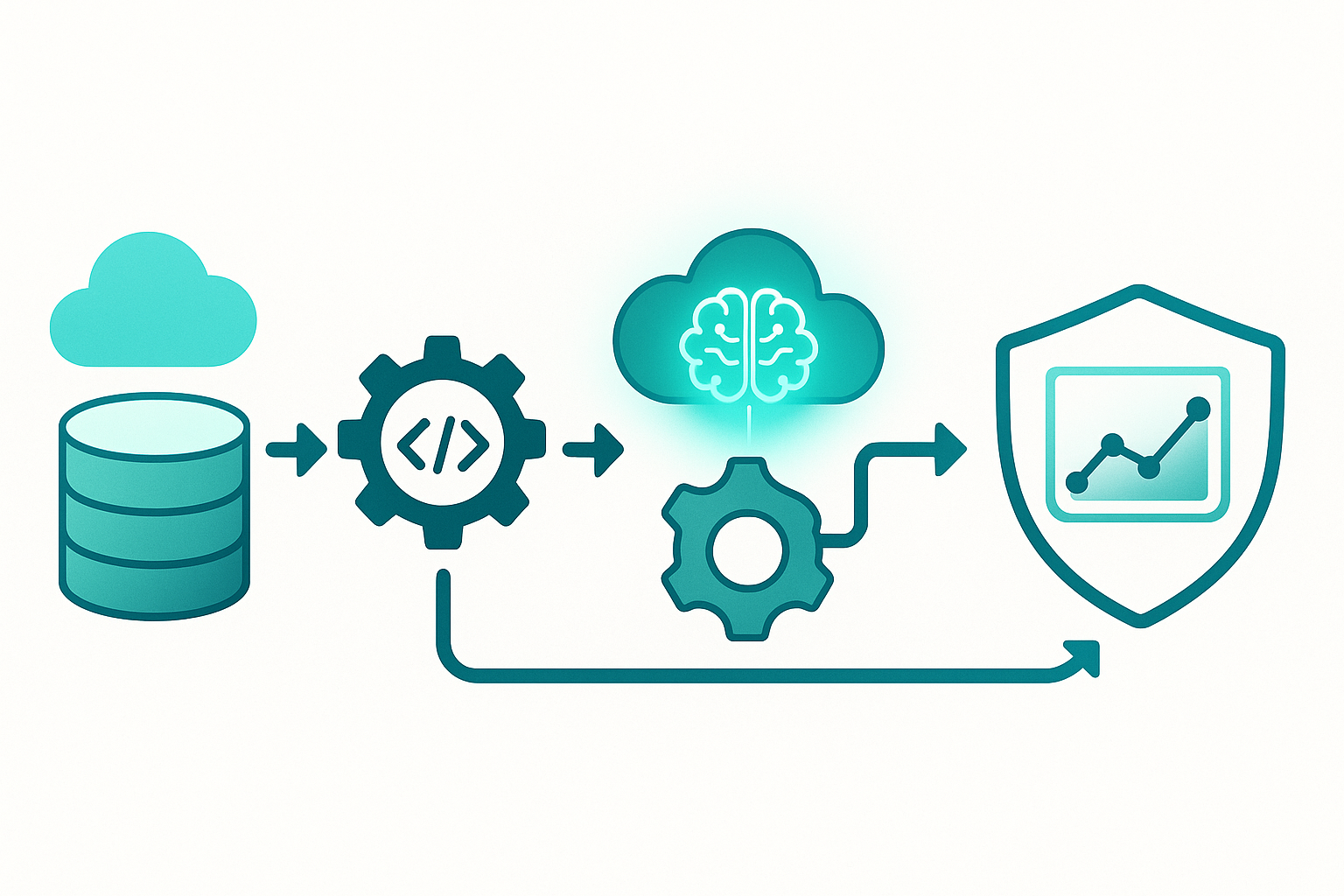
How do you build a future-proof BI stack with dbt and Snowflake?
If you are starting from scratch or modernizing an existing stack, here is a practical architecture:
-
Data warehouse: Snowflake or BigQuery as the compute and storage layer. Snowflake can be configured using basic user/password authentication, key pair, or OAuth.
-
Transformation layer: dbt Core or dbt Cloud for modeling and testing. Before you connect downstream tools, you will need to set up the dbt Semantic Layer and generate a service token.
-
AI analytics layer: Cortex Analyst for agentic, natural-language querying inside Snowflake. Cortex Analyst takes an API-first approach, giving you full control over the end-user experience.
-
Governance and insight layer: Kaelio to orchestrate self-serve analytics with full transparency, lineage, and access control.
Keep your AI honest with dbt tests
AI-generated SQL and insights need guardrails. dbt provides a pattern:
-
Set accuracy thresholds. Configure a custom dbt test to set an accuracy threshold (e.g., 75% accuracy). If AI sentiment predictions fall below this level, the test triggers a warning or error.
-
Store results for traceability. By using dbt to evaluate AI, organizations can apply the same rigorous testing principles they already use for data pipelines to ensure their AI models are production-ready and maintain quality and governance of all data assets centrally.
-
Trigger alerts on drift. When AI performance degrades, your CI pipeline catches it before bad answers reach business users.
This approach works for any AI use case: sentiment analysis, demand forecasting, anomaly detection, or natural-language querying.
A 10-Point Checklist for Selecting BI Stack Tools
Use this framework when evaluating your next BI investment:
- Integration depth. Does the tool connect natively to your warehouse and semantic layer?
- Governance controls. Can you enforce role-based, row-based, and column-based access?
- AI readiness. Does it support natural-language queries and generative AI features?
- Scalability. Can it handle your largest datasets without performance degradation?
- Self-service usability. Can business users get answers without SQL or training?
- Metric consistency. Does it read from a centralized semantic layer, or does each dashboard define its own logic?
- Auditability. Can you trace every answer back to its source query and data lineage?
- Vendor roadmap. Is the vendor investing in AI and semantic capabilities, or maintaining legacy features?
- Total cost of ownership. Include licensing, training, and the hidden cost of metric drift.
- Support and community. Is there active documentation, community forums, and responsive support?
As ThoughtSpot's BI comparison notes, "The decision you make now could be the difference between BI being a game-changer or just another layer of technical debt."
A useful benchmark: 56% of early adopters have exceeded business goals and are well ahead of competitors. The gap between leaders and laggards is widening. Meanwhile, every data leader today is in a race, "striving to extract the maximum value from their data and AI investments to gain a competitive edge."
Establish your governance guardrails early. The cost of retrofitting governance into a sprawling BI environment is far higher than building it in from the start.
The BI Stack decision today sets the pace for tomorrow
The tools you choose in February 2026 will define how fast your organization can move for the next several years. AI is not a feature checkbox; it is a paradigm shift that requires structured workflows, governed data, and trust at every layer.
Kaelio is designed for exactly this moment. Its Context Layer and Data Agent deliver fast, accurate, and trustworthy answers that reflect your organization's true logic and metrics. Kaelio continuously monitors key metrics and trends, alerting teams before small issues become major problems. And it does this while integrating with the dbt and Snowflake infrastructure your data team already maintains.
If you are evaluating your BI stack, start by auditing your semantic layer. Identify where metric definitions diverge across tools. Then consider how an AI-native, governance-first platform like Kaelio can close the gap between what business users need and what your data team can deliver.
The backlog is not going to clear itself. The tools you pick today determine whether AI becomes a force multiplier or another source of confusion.
FAQ
What are the key components of a modern BI stack in February 2026?
A modern BI stack in 2025 includes a cloud data platform for storage and processing, a semantic layer for centralized metric definitions, AI-native analytics for natural-language querying, and visualization tools for reporting.
Why is February 2026 considered a pivotal time for BI stack tools?
2025 is pivotal due to the convergence of AI-native insights, governed semantic layers, and cloud-scale platforms, driven by increased data budgets and the need for faster, more accurate insights.
How does Kaelio integrate with existing data infrastructure?
Kaelio auto-builds a governed context layer from your data stack, integrating with existing warehouses and transformation layers like dbt and Snowflake. Rather than replacing your semantic layer, it inherits existing metric definitions and combines them with schema, lineage, dashboard logic, and domain knowledge.
What makes Kaelio stand out among other BI tools?
Kaelio excels with its governance-first approach, structured AI workflows, semantic layer integration, and proactive monitoring, ensuring fast, accurate, and trustworthy insights.
How does Kaelio support AI-native analytics?
Kaelio supports AI-native analytics by enabling natural-language querying and integrating deeply with existing data infrastructure, ensuring consistent and reliable insights.
What role does the semantic layer play in modern BI stacks?
The semantic layer centralizes metric definitions, ensuring consistent and reliable data across departments, reducing metric drift, and supporting self-service analytics.
Sources
- https://docs.getdbt.com/docs/use-dbt-semantic-layer/dbt-semantic-layer
- https://www.getdbt.com/resources/reports/state-of-analytics-engineering-2025
- https://docs.getdbt.com/docs/cloud-integrations/avail-sl-integrations
- https://getdbt.com/blog/ai-driving-surge-in-data-budgets-2025-state-of-analytics-engineering
- https://www.gartner.com/peer-community/oneminuteinsights/omi-unleashing-power-generative-ai-data-analytics-jjq
- https://next.docs.getdbt.com/best-practices/how-we-build-our-metrics/semantic-layer-1-intro
- https://next.docs.getdbt.com/best-practices/how-we-build-our-metrics/semantic-layer-9-conclusion
- https://www.thoughtspot.com/data-trends/business-intelligence/looker-alternatives
- https://docs.snowflake.com/en/user-guide/snowflake-cortex/cortex-analyst
- https://www.thoughtspot.com/product/analytics
- https://docs.getdbt.com/blog/ai-eval-in-dbt
- https://www.atscale.com
- https://kaelio.com/blog/best-ai-analytics-tools-for-healthcare-organizations
- https://www.thoughtspot.com/data-trends/business-intelligence/looker-vs-power-bi
- https://docs.getdbt.com/docs/core/connect-data-platform/snowflake-setup
- https://www.thoughtspot.com/data-trends/business-intelligence/bi-tools-comparison
- https://www.thoughtspot.com/data-trends/business-intelligence-vendors
- https://next.docs.getdbt.com/guides/sl-partner-integration-guide